
Short version: a kit works fine for a standard site. The catch is that remote operations are almost never standard. That gap is where most off-grid disappointment lives.
The Appeal
Why kits are tempting.
They're cheap, they're simple, and they ship in a box with a parts list. For a small cabin near the grid where someone wants to tinker, that can be the right call.
The Break Point
Where they fail.
A kit is sized for an average, and off-grid loads aren't average. The pump that cycles hard all summer, the well that's 400 feet down, the shop welder, the run of cloudy days you have to ride out, none of that fits a one-size box. Undersize the system and the generator runs every night to cover the gap. That's not a hypothetical; it's the single most common thing we get called in to fix.
A Real Site
The Sunflower farm.
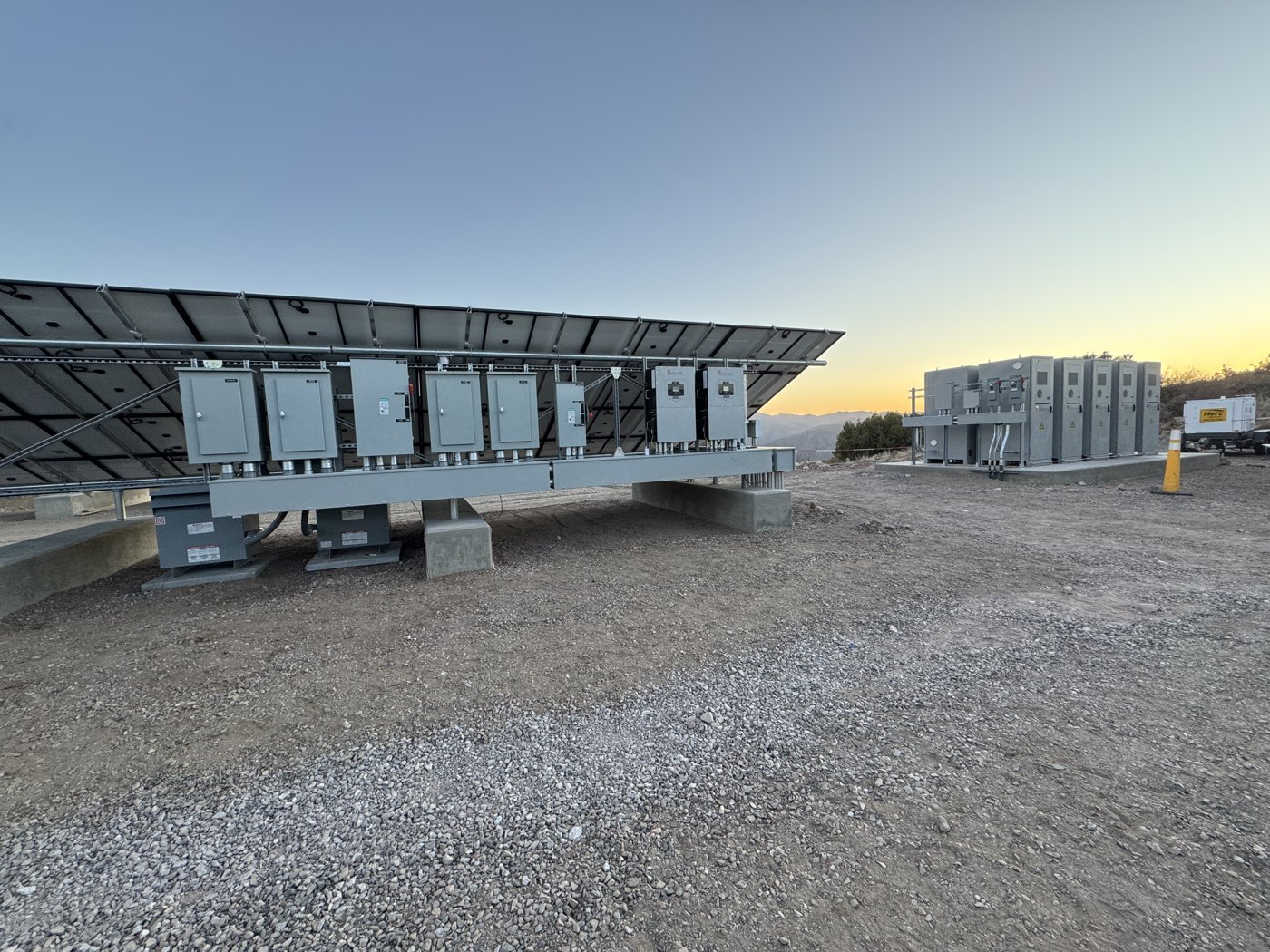
One example: a working farm in Sunflower, Arizona, running chickens, goats, and seven full-time residents on a legacy solar system the utility had installed as a test project. It never kept up. The site leaned on an LP generator nearly 75% of the time. We designed and built a properly sized system in a dedicated power shed, and the farm tripled its electrical use, ran air conditioning, and cut the generator down to almost nothing, with room left to grow.
What Custom Means
Right-sized, not oversized.
It doesn't mean expensive for its own sake. It means sizing the system to how your loads behave across a day and a season, picking equipment for your terrain and climate, and leaving headroom to expand.
The Hidden Cost
One number to call.
When a kit fails, there's no one standing behind it. The installer, if there was one, is long gone. With a design-build firm that engineers, builds, and services the system, there's one number to call and one company accountable. Over the life of the system, that's worth more than any line on a spec sheet.
When A Kit Works
The narrow case.
Small, standard, close to the grid, and you enjoy the DIY. Outside of that, if the site is remote or the loads are real, engineering to the actual site is the only thing that holds up.