
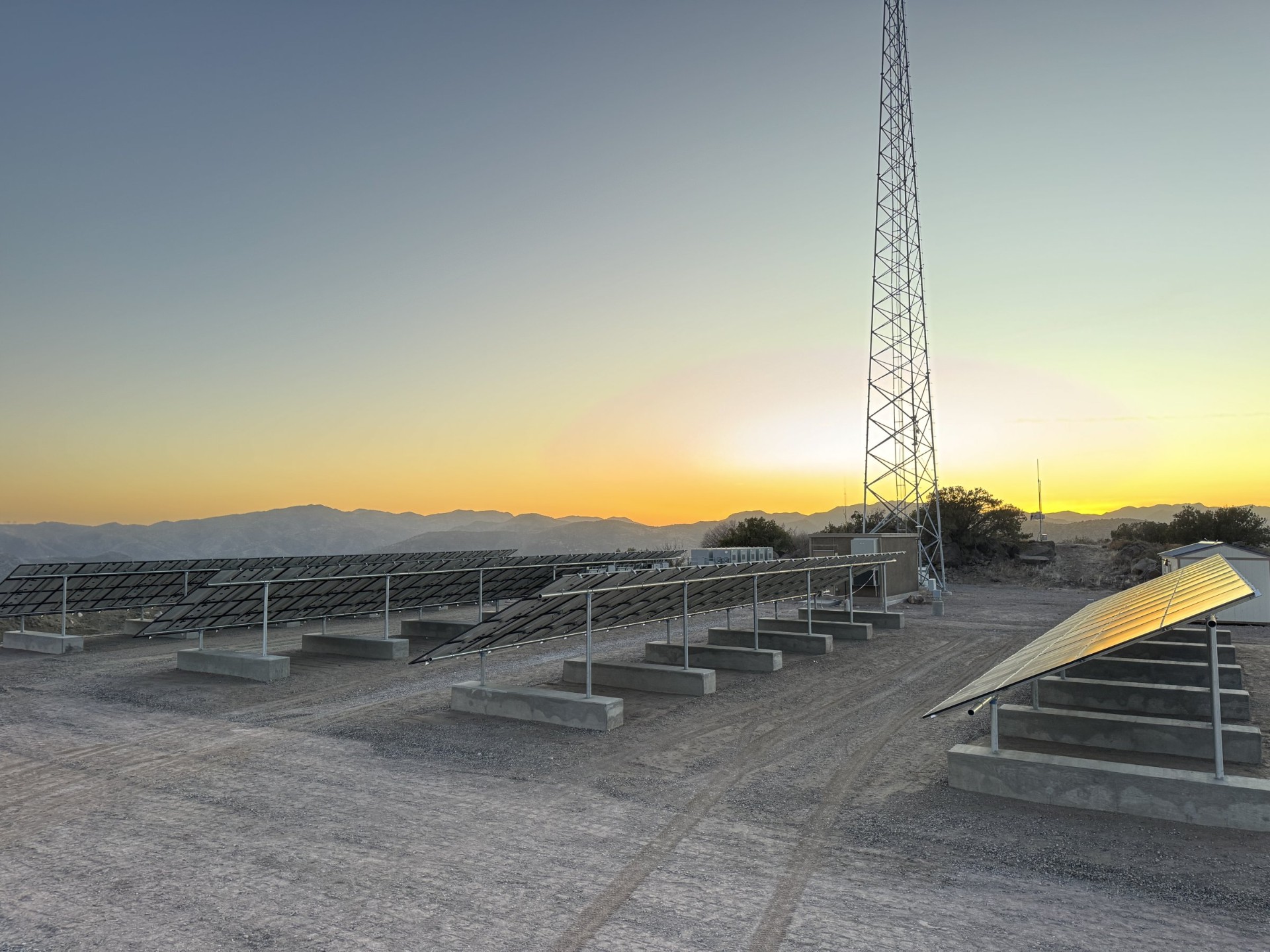
Here's the surprising part: the solar panels barely changed. A modern panel isn't fundamentally different from one made fifteen years ago. Everything behind the panels, though, is a different world, and that's where off-grid got dramatically better.
Storage
Lithium replaced lead-acid.
That's the big one. Lithium iron phosphate batteries carry ten-year warranties instead of three, use more of their rated capacity, and need almost no maintenance. No watering, no monthly hydrometer readings, no cleaning terminals. One client of ours added up the hours: roughly 300 spent maintaining a lead-acid bank over 15 years, gone with the switch. In the field we build with hardware like Pytes V5, Sol-Ark L3, and Discover AES lithium.
Power Electronics
Inverters got smart.
Modern power-conversion systems from the likes of Sol-Ark and Schneider coordinate solar, battery, and generator together and can be tuned remotely. The inverter used to be a dumb box. Now it's the traffic cop for the whole system.
Hard Sites
Supercapacitors handle the brutal ones.
For sites with spiky loads and brutal conditions, supercapacitor storage holds up where other chemistries struggle. We've used it at a fly-in Alaska lodge and at remote telecom sites outside Yosemite.
Microgrid Controllers
The brain that ties it all together.
The real leap is the controller, which lets equipment from different manufacturers run as one coordinated plant. It's how a copper mine's communications network holds a 100% uptime record and a private island in Panama runs on 2 megawatt-hours of storage.
Monitoring
And you can watch it from anywhere.
Remote monitoring means a site that used to go dark unnoticed is now watched from an engineering office, so problems get caught before they become outages. For critical sites, that's the difference between a service call and a crisis.
The technology got better across the board. What hasn't changed is that the hard part is still the engineering: sizing it, integrating it, and standing behind it for the long haul.